Smart RGB LED Strip Control Solution
To install RGB LED strips above and below my computer desk, I checked out related products on Taobao and JD. Honestly, the options weren’t great—either ridiculously expensive, poorly designed, or lacking smartphone control. Since I already have an Aqara gateway at home, I looked for related products from Aqara.
By the way, if you’re into IoT development boards, the best solution is using an ESP32 + MOSFET switch + the WLED open-source system, costing about 15 RMB.
The Aqara product is this: the Aqara Smart LED Strip Driver Module, 100 RMB:
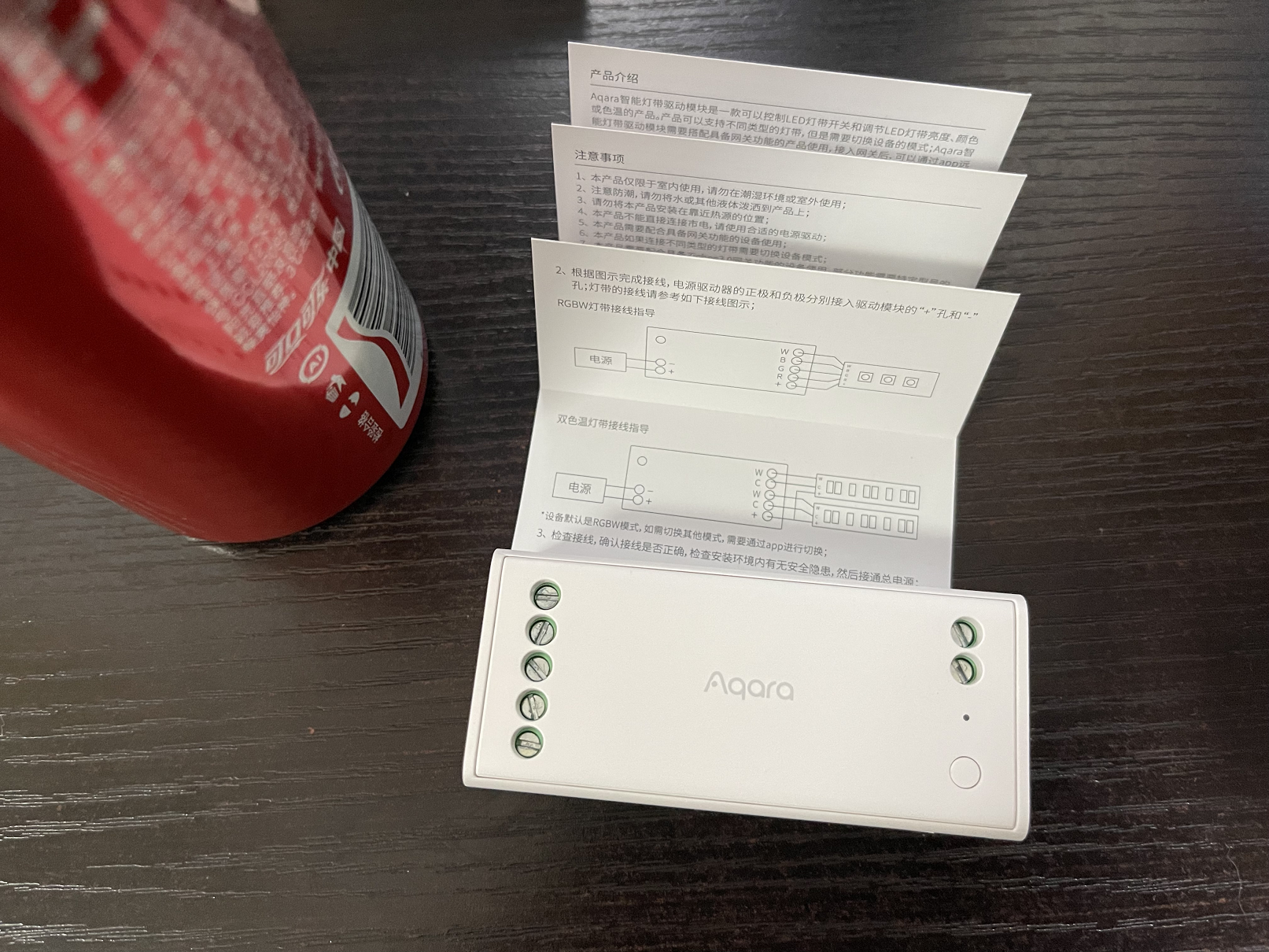
You need to buy an RGBW LED strip, which has 5 pins: power +, and control signals for r, g, b, and w (warm white). I bought a 24V, 10-meter strip for 120 RMB.
Then you need a 24V switching power supply. I tried several LED switching power supplies from Taobao, but they all had high-frequency noise. I ended up having to choose the more expensive Ceton switching power supply. Probably Mean Well would work too, but I’m not sure about the size—LED switching power supplies are usually flat.
To connect the two strips above and below, I used network cable to connect to the 5-pin head, making extension cables:
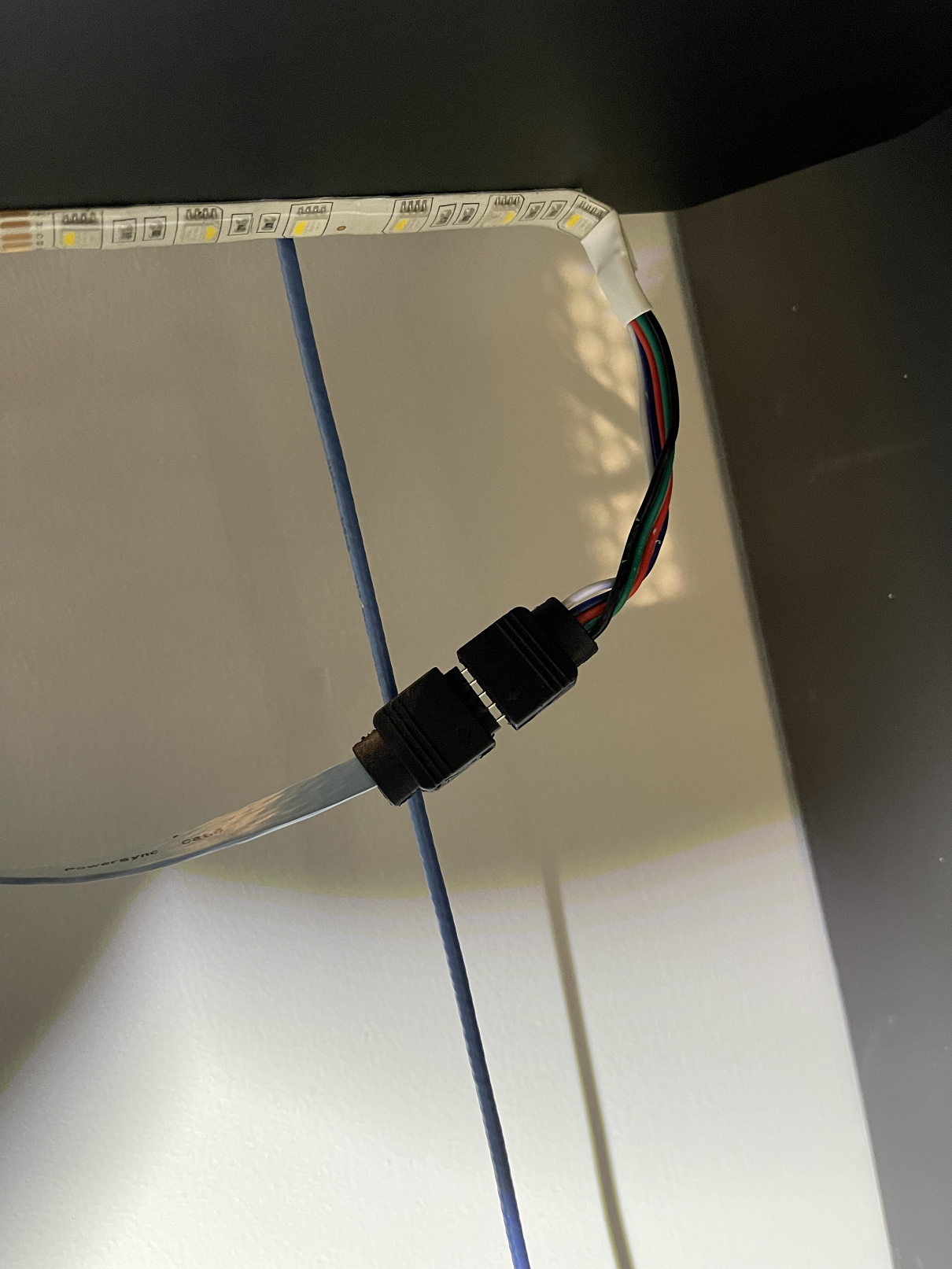
Installation is simple, just connect according to the labels.
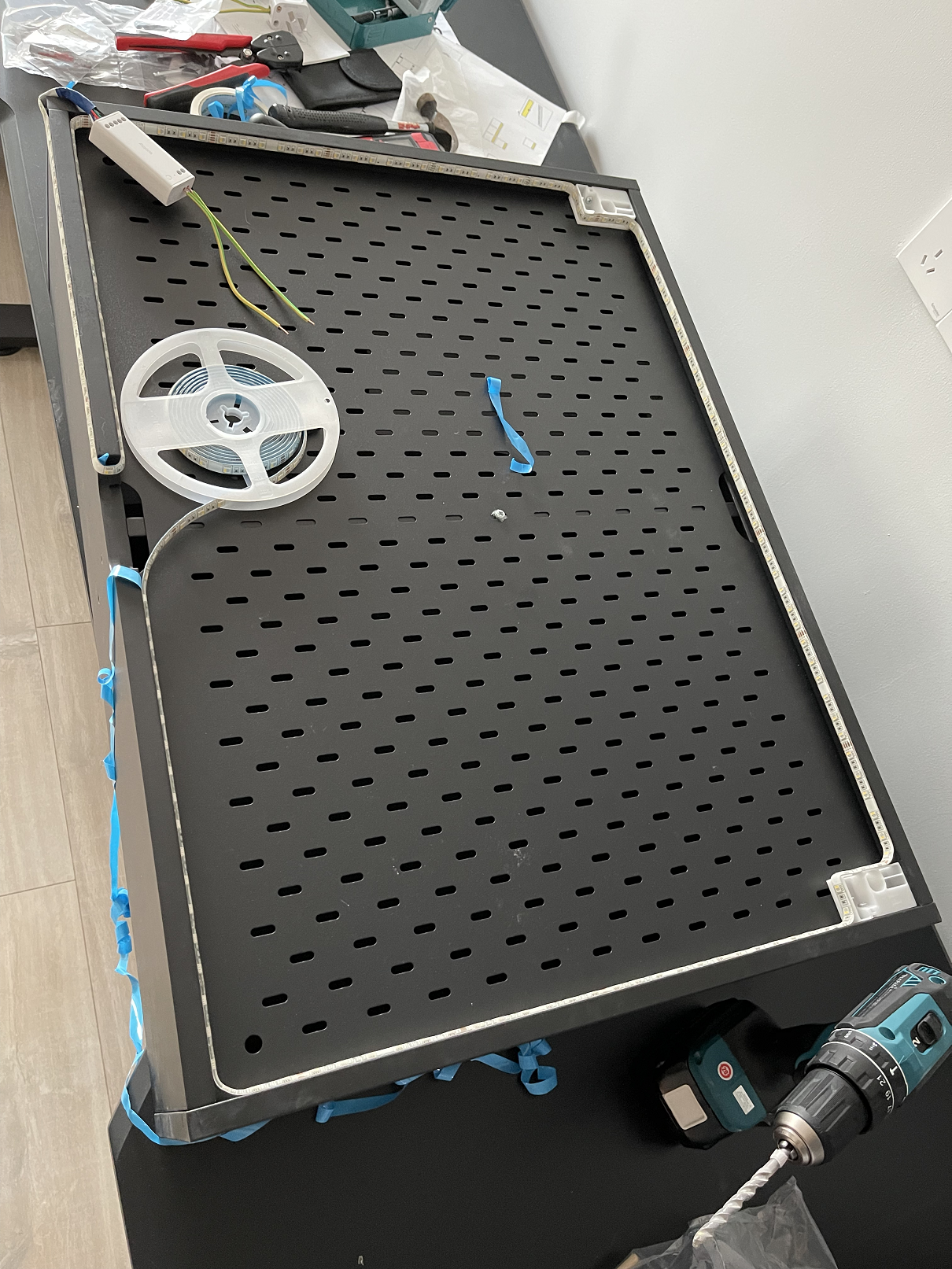
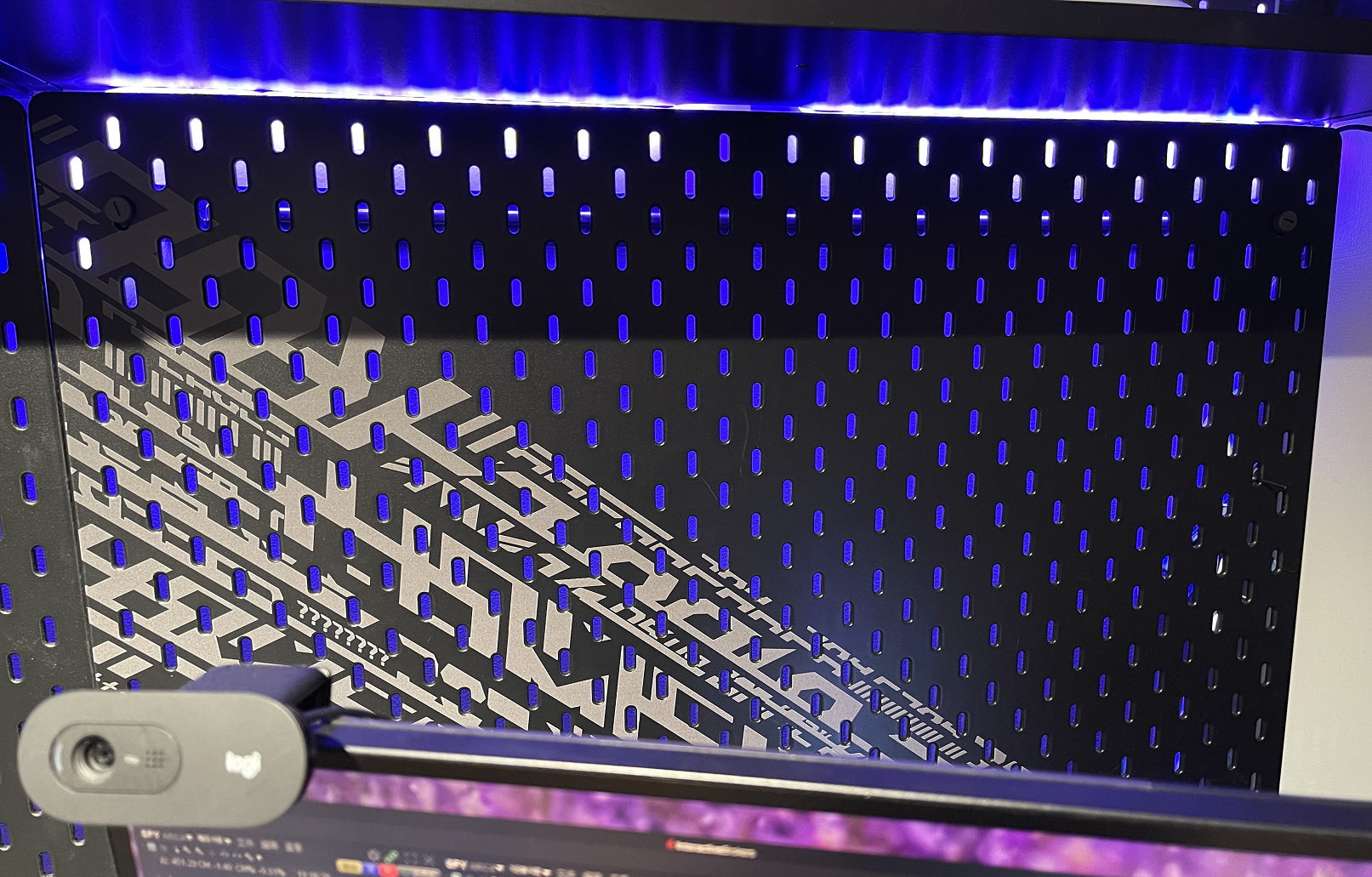
Final result:
App control interface:
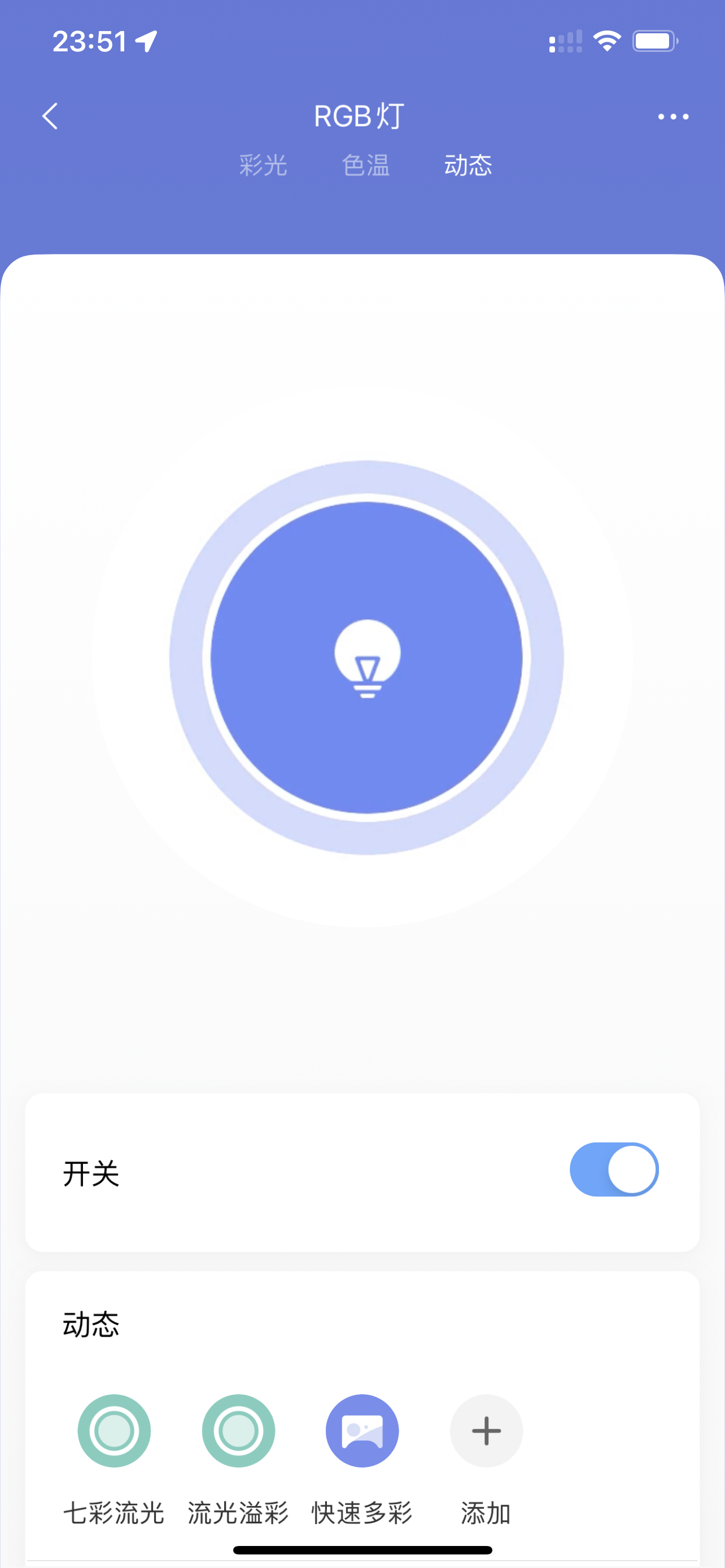
The dynamic effects are just simple color fades. I originally thought it would have marquee effects like computers, but naturally, it doesn’t.
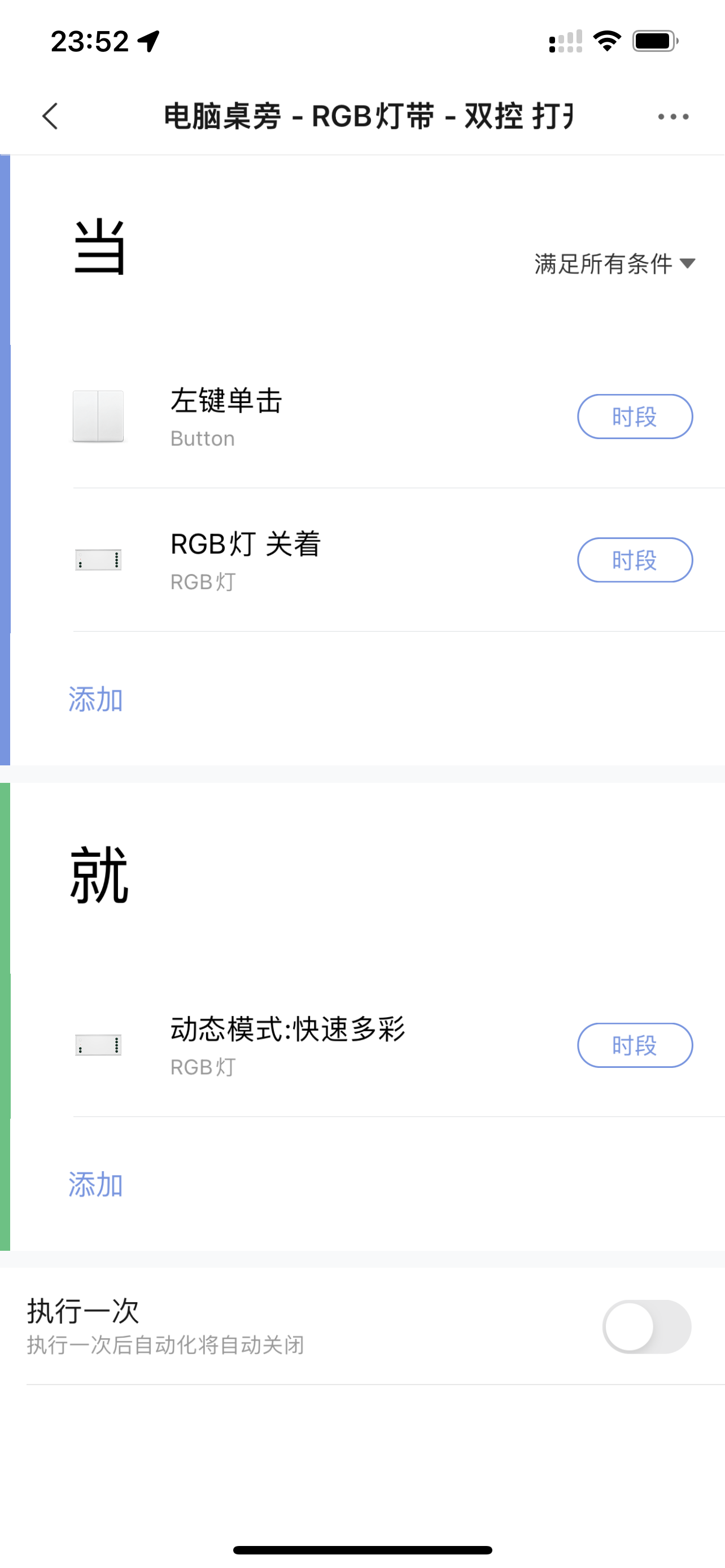
And there’s a serious issue: the state of dynamic effects isn’t saved. After turning the lights off and on again, the effect is gone.
I couldn’t find a place to report or ask about this problem. Fortunately, you can set lighting effects in automations. Setting up an automation to apply the dynamic effect every time it turns on solves the issue.
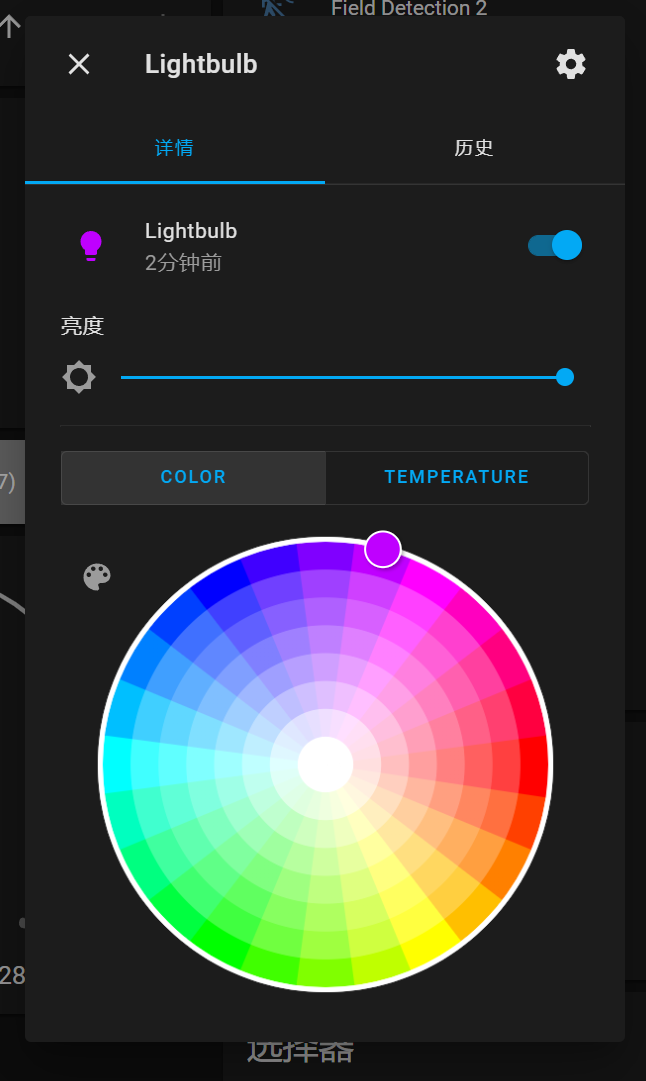
This thing supports HomeKit, but you can’t set dynamic effects within HomeKit. However, you can connect it to HomeAssistant via Homekit Controller, and then you can program it however you like.
10 meters of RGB, with smartphone control, compatible with Xiaomi and HA, all for a total of 220 RMB—much cheaper. However, RGB strips consume more power than I imagined, about 40 watts. Using them for a month costs about 25 kWh, so I can only run them at 50% brightness.