First Boot of the RTX 3090 and a Comparison with the 2080 Ti
After waiting a month for stock, I finally got my hands on the Gigabyte 3090 Gaming OC 24G from JD.com. I chose this card mainly for its 4-year warranty. My previous card was a 2080 Ti Founders Edition, which died with a screen full of artifacts.
A quick test and comparison:
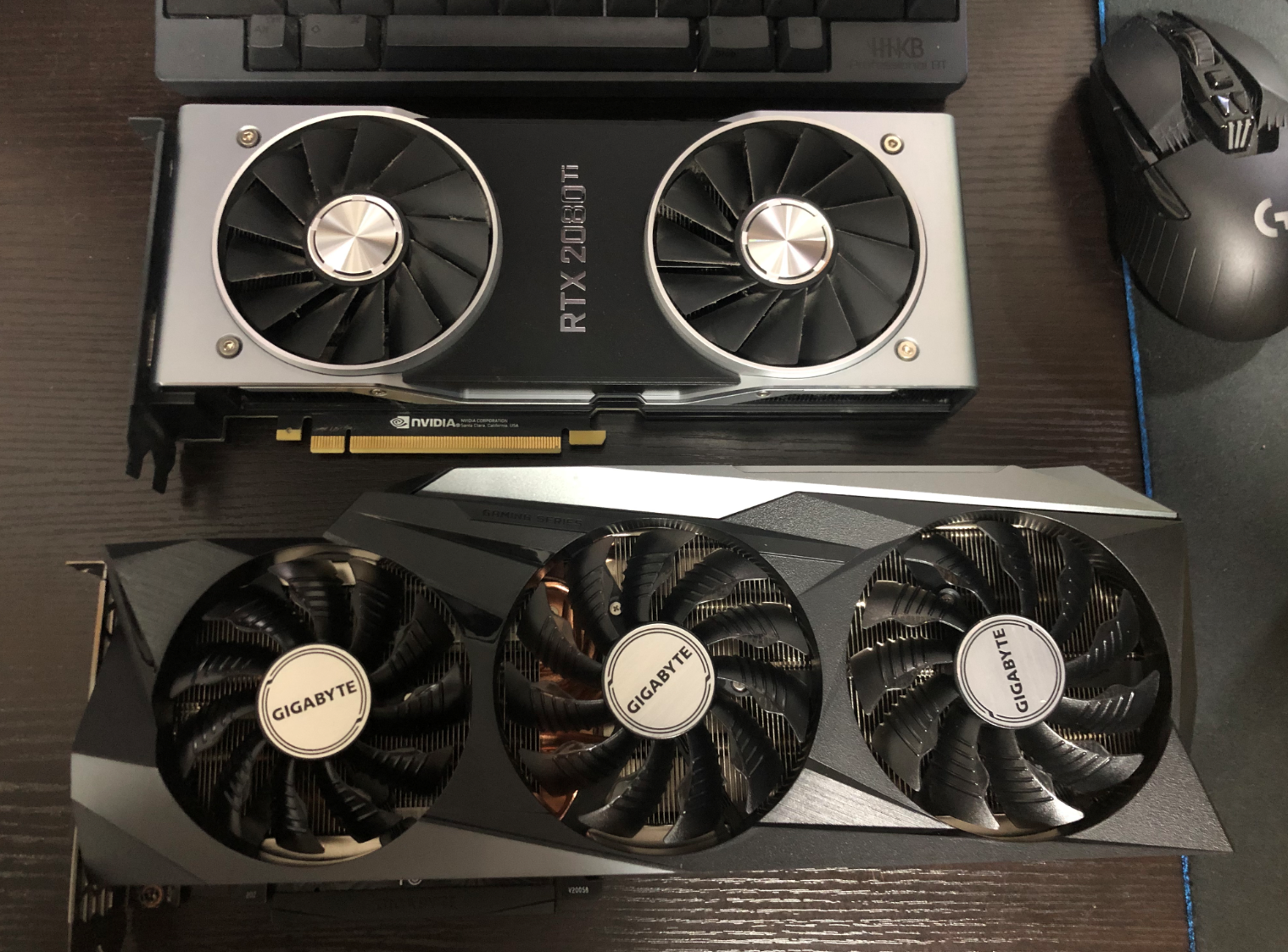
The thickness is about 1.7 times that of the 2080 Ti Founders Edition. The length is as shown in the picture, so the optical drive/hard drive bay needs to be removed from the case.
Plugged in and powered on. The 850W power supply is sufficient:
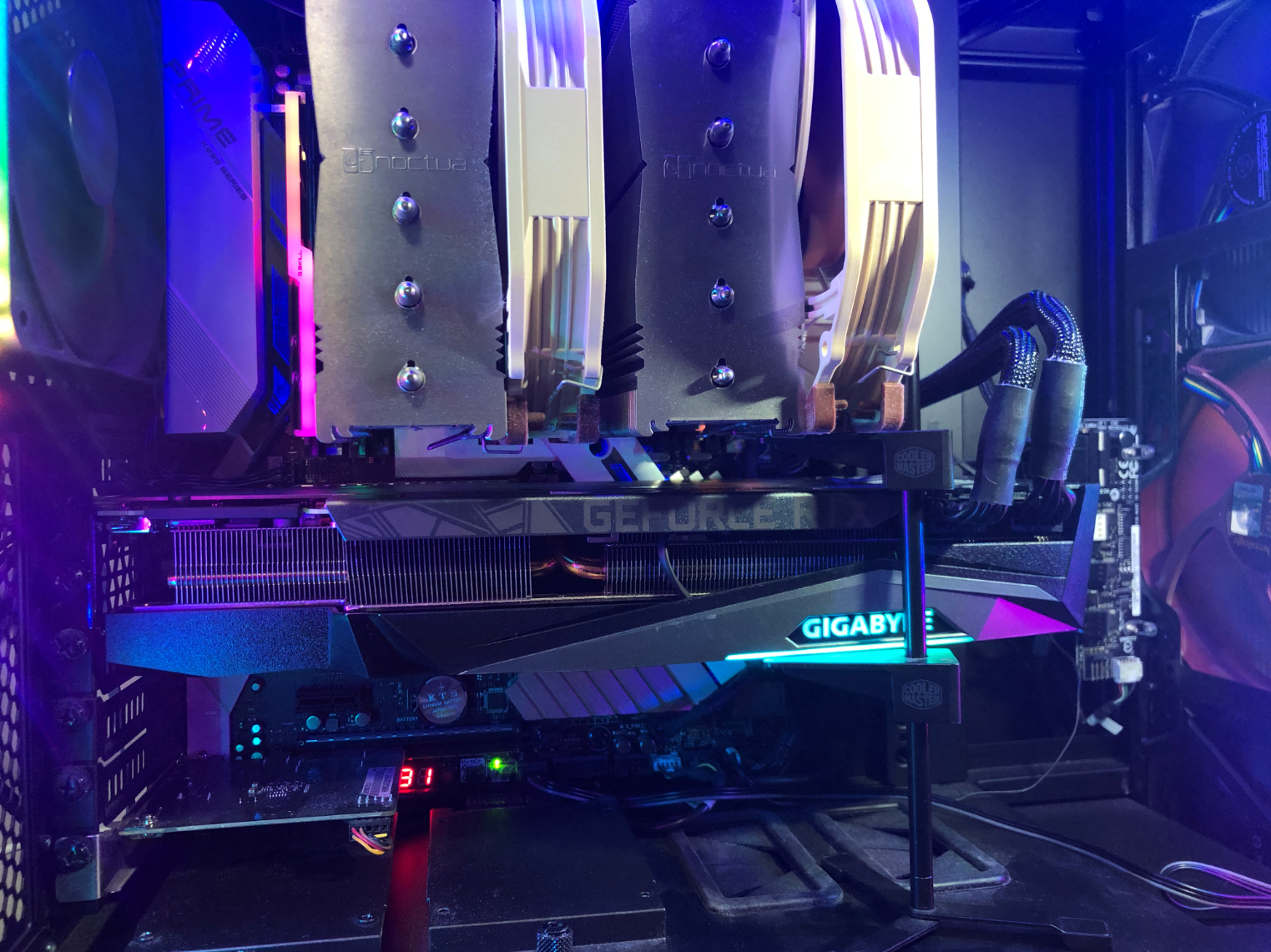
Overall, temperatures are a bit lower than the 2080 Ti Founders Edition. Under full CUDA load for 5 days, the temperature stabilized around 70°C. After all, the card is much larger.
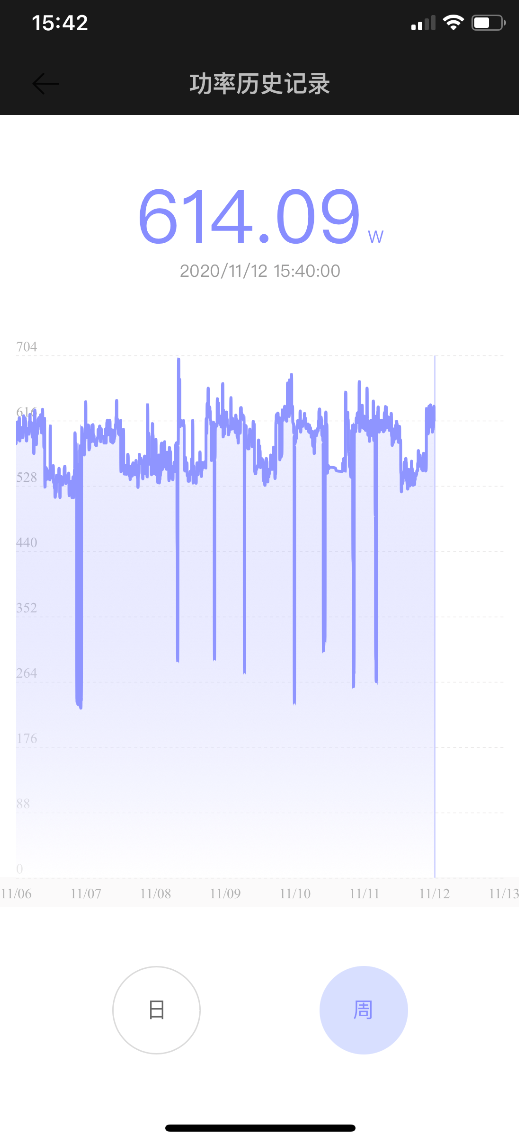
Measured power draw with a Xiaomi smart plug. The system runs at around 500W. With my 2 monitors and 2 routers, etc., it’s about 600W total. It can be used as a heater indoors, and the effect is really good. You get computing power and free heating—a double win.
Regarding noise, it’s very loud at full load. At low loads, the noise from my case fans far exceeds that of the graphics card. I added a HEPA filter layer to the case, which makes it quite noisy. The benefit is no dust. The picture of the 2080 Ti above was taken directly after 2 years of use—it’s clean.
Computing Power
If you’re doing deep learning or parallel computing, remember to use CUDA 11. Older versions like CUDA 10 do not support the 3090.
My system still uses the old PCIe 3. The bus speed mainly affects the speed of copying data to VRAM. I only copy data once during initialization, so I don’t have a need for PCIe 4. If you use deep learning and need batching, then PCIe 4 is necessary.
Tested the computing power of the RTX 3090 compared to the 2080 Ti. Using PyTorch 1.7 + CUDA 11, running my own program. While not representative for benchmarks, it shows the performance difference between the two cards. Results are as follows:
| 3090 | 2080Ti | CPU | |
|---|---|---|---|
| Simple Mean | 88 ms (34x) | 144 ms (20x) | 3 s (1x) |
| Mixed Algorithm | 184 ms (76x) | 282 ms (50x) | 14 s (1x) |